Midland T51VP3 vs T71VP3: Which X-Talker? (October 2026)
Choose the T71VP3 for more channels, more privacy codes and alkaline battery flexibility; choose the T51VP3 for compact carry and eVOX. Both are license-free FRS pairs with NOAA weather scan.
On this page (8 sections)
- Midland X-Talker T51 vs T71: what changes?
- How do channel and privacy code counts affect your choice?
- Does either radio offer better range?
- Which one is easier to keep powered?
- Which radio suits hands-free use?
- What about weather alerts?
- Should you choose the T61VP3 instead?
- Which Midland X-Talker should you buy?
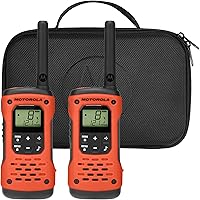
Choose the T71VP3 for more channels, more privacy codes and alkaline battery flexibility; choose the T51VP3 for compact carry and eVOX. In this Midland X-Talker T51 vs T71 comparison, both pairs include rechargeable battery packs and NOAA weather scan.
The T51VP3 has 22 FRS channels and 38 privacy codes. The T71VP3 has 36 channels and 121 codes, giving you more settings to coordinate with a group.
Both have a stated average battery life of 10 hours. The main choice is whether you value the T51VP3's compact dimensions and hands-free feature or the T71VP3's extra channel options and ability to use standard alkaline batteries.


Midland X-Talker T51 vs T71: what changes?
The T71VP3 has 14 more FRS channels and 83 more privacy codes than the T51VP3. The T51VP3 measures 2.2 in wide and 1.3 in deep, and its eVOX feature supports hands-free transmission.
Both radios include channel scan and NOAA weather scan. The T51VP3 also specifies a NOAA weather alert, while the T71VP3 specifies weather scan.
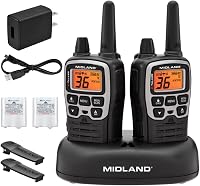
The T51VP3 package includes rechargeable battery packs, a desktop charger, a Micro USB cable, 2 belt clips and an owner's manual. The T71VP3 package also includes an AC wall adapter.
How do channel and privacy code counts affect your choice?
Pick the T71VP3 if your group needs more channel and code combinations; the T51VP3 offers fewer settings. More options can help when you need to find an unused combination, but everyone in the group must match.
The T51VP3 has 22 channels and 38 CTCSS privacy codes. The T71VP3 has 36 channels and 121 codes.
Privacy codes are a filtering feature, not encryption. Another radio set to the same channel can still hear a transmission if it uses a compatible code or has its code feature turned off.
Before an outing, agree on the channel and code, then try a short call with the radios near each other. The walkie-talkie channels and privacy codes guide explains what the settings do and how to coordinate them.
When is the T51VP3 enough?
The T51VP3 may suit you if your group only needs a few shared settings and you prefer its compact dimensions. It measures 2.2 in wide and 1.3 in deep.
Its 38 privacy codes provide fewer combinations than the T71VP3, but a larger count doesn't guarantee better communication. Distance, buildings, terrain and radio placement all affect whether you can hear the other person.
When are the T71VP3's extra settings useful?
The T71VP3 gives your group more channel and code combinations to try when a setting is busy. That may help with coordination in a crowded place, but the radios still need to share compatible settings.
Its 36 channels give you more choices for organizing a larger group. For general FRS basics and other radio types, see the two-way radio starter guide.
Does either radio offer better range?
The advertised range figures don't tell you the distance you'll get on a particular trip. The T51VP3 has a stated maximum range of 28 miles, and the T71VP3 has a stated maximum range of 38 miles in unobstructed environments with minimal or no obstacles.
Treat those figures as maximums, not promises for a neighborhood, trail or building. Trees, hills, walls and radio position can reduce the distance at which voices remain clear.
A short test in the place you plan to use the radios can tell you more than comparing maximum numbers. If you need radio range for a specific route, our guide to how far a GMRS radio can reach explains why terrain and setup change real-world communication.
Which one is easier to keep powered?
Choose the T71VP3 if you want the option to use standard alkaline batteries; choose either pair if rechargeable packs suit your routine. Both have a stated average battery life of 10 hours, but that figure doesn't promise the same runtime in every use.
The T51VP3 package includes rechargeable battery packs, a desktop charger and a Micro USB cable. The T71VP3 package includes rechargeable packs, a desktop charger, a Micro USB cable, an AC wall adapter and 2 belt clips.
The T71VP3 can also use standard alkaline batteries. That flexibility can help if you can't recharge during an outing or power outage.
Check which batteries you plan to carry and how you'll recharge before a trip. A set of spare batteries or a charged pair can matter more than a small difference in stated maximum range.
Which radio suits hands-free use?
The T51VP3 suits you if you want eVOX for hands-free transmission. Its Easy Voice and Sound Activation Transmission feature has 3 sensitivity levels.
The T71VP3 feature details don't specify eVOX. For more on the T51VP3's stated features and package, see the Midland T51VP3 review.
Hands-free voice activation can transmit when the radio detects sound, so consider the noise around you and how you plan to carry it. The feature is useful only if its sensitivity works for your setting.
What about weather alerts?
The T51VP3 specifies NOAA weather scan and alert; the T71VP3 specifies NOAA weather scan. If receiving an audible weather alert matters to your decision, the T51VP3 has the clearer fit based on its stated features.
The T51VP3 scans 10 weather band channels and locks onto the strongest one. Its alert sounds an alarm for severe weather risk in your area.
The T71VP3 also scans NOAA weather channels, but an alert isn't specified. For a dedicated weather radio, compare options in our Midland weather radio guide.
Should you choose the T61VP3 instead?
Consider the T61VP3 if you want 36 channels and 121 privacy codes along with eVOX and a stated NOAA weather alert. It shares those channel and code counts with the T71VP3 and has eVOX with 9 sensitivity levels.
The T61VP3 also has NOAA weather scan and alert. It measures 2.2 in wide and 1.3 in deep, the same width and depth as the T51VP3.
Alkaline battery flexibility isn't specified for the T61VP3. If that matters most, the T71VP3 is the clearer choice; if hands-free use matters more, compare the T61VP3.
Which Midland X-Talker should you buy?
Choose the T71VP3 for more FRS channels, privacy codes and alkaline battery flexibility. Choose the T51VP3 for compact carry, eVOX and NOAA weather alert.
If neither tradeoff fits, the T61VP3 combines the T71VP3's channel and code counts with eVOX.
The T51VP3 suits a pair that values its compact dimensions and hands-free feature. The T71VP3 makes more sense when extra channel choices and backup battery options matter more.
Whichever pair you choose, agree on channel and code settings before you need them. For other family and outdoor radio options, browse our walkie-talkie guides.
Our score weighs specs and features against what you're shopping for.
Frequently asked questions
What is the difference between Midland T51 and T71?
The T71VP3 has 36 FRS channels and 121 privacy codes, while the T51VP3 has 22 channels and 38 codes. The T51VP3 adds eVOX with 3 sensitivity levels; the T71VP3 can use standard alkaline batteries as well as its rechargeable packs.
Do the Midland T51VP3 and T71VP3 use the same channels?
Both are FRS radios, but the T71VP3 offers 36 channels and the T51VP3 offers 22. They can communicate when set to a channel and code both radios support; the walkie-talkie channel and privacy code guide explains how to coordinate settings.
Which Midland X-Talker has more privacy codes?
The T71VP3 has 121 CTCSS privacy codes, compared with 38 on the T51VP3. These codes can help filter other conversations from your speaker, but they don't make a conversation private or prevent another radio from listening on the same channel and code.
Can the T51VP3 or T71VP3 receive NOAA weather alerts?
The T51VP3 has NOAA weather scan and alert, while the T71VP3 specifies NOAA weather scan. If an audible alert is a key reason for your choice, compare each radio's stated features and learn how NOAA weather radio channels work.