How Far Can a GMRS Radio Reach?
GMRS radio range varies from short distances in obstructed areas to farther with clear line of sight or a repeater. Terrain, antenna height, radio power, and the setup at both ends matter more than a maximum-range claim.
On this page (8 sections)
- How far can a GMRS radio reach in real conditions?
- What affects GMRS radio range the most?
- Can a GMRS repeater extend your range?
- How far can handheld GMRS radios reach?
- Do mobile GMRS radios reach farther than handhelds?
- How can you estimate range for your route?
- What should you know about channels and privacy codes?
- How far can a GMRS radio reach for your use?
GMRS radio range varies from short distances in obstructed areas to farther with clear line of sight or a repeater. Terrain, antenna height, radio power, and the setup at both ends matter more than a maximum-range claim.
A handheld may work across a campsite or work area, then lose contact when a ridge or building gets between radios. For a practical estimate, think about the route and obstacles, not just the advertised number.
How far can a GMRS radio reach in real conditions?
GMRS radios can reach different distances in different places, so there is no reliable single-mile answer. A clear path between radios helps, while hills, buildings, and dense trees can block or weaken a signal.
A radio’s maximum-range figure describes a favorable scenario. It doesn’t tell you what to expect from inside a vehicle, behind a hill, or between buildings.
Height may help clear some obstructions and improve the path between antennas. Even with a powerful radio, a low antenna behind terrain can limit contact.
For a group trip, test radios along the route at the distances where you expect to use them. Keep a backup plan for spots where the signal drops.
What affects GMRS radio range the most?
Terrain and antenna height often matter more than a headline range number. Power, antenna design, obstructions, and the receiving radio also shape the result.
How do hills, trees, and buildings change coverage?
Obstacles between radios can shorten range or block a signal. A ridge can stop direct communication, while buildings and dense vegetation can weaken it.
Try moving to an open area or a higher safe spot if a call doesn’t get through. A small change in position may clear an obstruction, but it can’t guarantee a connection.
Does more power always mean more range?
More transmit power may help, but it cannot make a blocked path clear. Antenna placement, terrain, and the radio receiving the signal remain important.
A vehicle radio can suit a fixed or mobile setup, while a handheld lets each person carry a radio. Choose based on where you need to communicate, then check the radio’s permitted channels and use.
Why does antenna height matter?
A higher antenna may improve the signal path by clearing nearby obstacles. This can help from a raised location or with a vehicle antenna positioned outside the cabin.
Keep installation safe and follow the radio and antenna instructions. For mobile setups, our GMRS mobile radio guide can help you compare vehicle radio options.
Can a GMRS repeater extend your range?
Yes, a reachable GMRS repeater can relay signals and extend communication beyond direct radio-to-radio range. The repeater’s location, coverage, access, and compatible channel settings all matter.
A repeater receives a transmission and rebroadcasts it from a different location, often one with a better view of the surrounding area. That relay can help radios communicate across terrain that would otherwise block them.
You need radios that can use the repeater, and you need to be within its usable coverage. A repeater’s advertised coverage is not a guarantee for every route or location.
Read what a GMRS repeater is and whether you need one before planning a trip around repeater coverage. For a direct radio comparison, GMRS channels and frequencies explains where repeater channels fit.
Which handheld is built for repeater use?
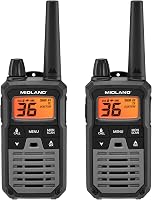
The Midland GXT3000 2-pack is repeater-capable and includes 50 channels, weather alert, and rechargeable lithium-ion packs with USB-C charging.
Its stated maximum talking range is not a promise of that distance in your terrain. Check repeater compatibility and coverage before you rely on it.
How far can handheld GMRS radios reach?
A handheld’s useful range depends on where you stand and what lies between you and the other radio. Open ground and elevation may help, while indoor use, vehicle interiors, and uneven terrain can reduce coverage.
A portable radio is useful when people move around a site or travel on foot. Keep the radio where its antenna can work as intended, and avoid assuming that a signal will pass through a hill or structure.
The Midland GXT67 PRO is a repeater-capable handheld with 5W transmitting power and 22 pre-programmed channels plus 28 privacy codes. Its listed features include a backlit display and oversized buttons.
If your group uses a repeater, confirm the channel and settings before departure. Our guide to what GMRS radio is and whether you need a license covers the basic rules.
Do mobile GMRS radios reach farther than handhelds?
A mobile radio can suit vehicle communication, but it still depends on antenna placement, terrain, and the radio at the other end. It won’t guarantee a specific range simply because it is installed in a car or truck.
The Midland MXT575 is a 50W MicroMobile radio with 15 high-power channels and 8 repeater channels. Its integrated control microphone is designed for vehicles with limited dashboard space.
The Midland MXT275 is a 15W MicroMobile radio with an integrated control microphone, 15 high-power channels, and 8 repeater channels.
For both radios, plan the antenna installation around your vehicle and follow the manufacturer’s instructions. A vehicle radio can help your group communicate while driving, but it doesn’t remove terrain or distance limits.
How can you estimate range for your route?
Use a route test and known obstacles to estimate coverage instead of treating a maximum-range figure as a guarantee. Test from places where your group expects to call, including low spots and areas behind buildings or hills.
Before leaving:
- Set up the radios on the channels you plan to use.
- Check direct radio-to-radio contact in open areas and at likely stopping points.
- Test repeater access separately if you plan to use one.
- Mark weak spots and agree on a backup check-in plan.
Keep the radios charged and make sure each person knows the channel settings. If a call fails, try an open or higher location when it is safe to do so.
What should you know about channels and privacy codes?
Channels and privacy codes help radios share settings, but a privacy code does not create a private or longer-range signal. Everyone in the group must use compatible settings to communicate.
GMRS channels have rules about how radios may transmit. See GMRS channels and frequencies for a plain-language guide to the channel options.
For the basics on licensing and the service, start with what GMRS is and whether you need a license. Knowing the rules helps you choose the right setup before you use it.
How far can a GMRS radio reach for your use?
For planning GMRS radio range, choose a setup around your route, terrain, and need for repeater access. A handheld pair can suit portable group communication; a vehicle radio can fit a mobile setup; and a repeater may help when direct paths are blocked.
The GXT3000 pair and GXT67 PRO are handheld options with repeater capability.
The MXT575 and MXT275 are vehicle radios with repeater channels. Compare the channel setup and installation needs before choosing.
If you need communication across an area with terrain barriers, read how GMRS repeaters work and check actual local coverage before relying on it.
Frequently asked questions
How far can a GMRS radio reach in real life?
There is no single real-world distance. Buildings, hills, trees, and low antenna height can block a signal.
Open, raised locations may help, while a compatible repeater may extend communication beyond direct line of sight.
Check your route and test coverage before relying on it.
Do GMRS radios really reach 50 miles?
A 50-mile maximum range is a stated capability, not a promise for every trip. Long, clear paths between raised antennas can support greater distances than a street, forest, or valley.
Plan for obstructions to reduce range and arrange a backup way to communicate.
Does a GMRS repeater increase range?
A repeater can increase range by receiving a signal and retransmitting it from a higher location. Both radios need compatible repeater channels and settings, and the repeater must be reachable and available to you.
Learn how this setup works in our GMRS repeater guide.
Is GMRS range better than FRS range?
GMRS offers setup options such as higher-power radios and repeater use, but actual coverage still depends on the path, antennas, and terrain. GMRS also has licensing rules.
Read our guide to what GMRS is and whether you need a license before choosing a radio.