8 Best NOAA Weather Radios (October 2026)
The best NOAA weather radios include the Midland WR400 Weather Radio Deluxe for family alert stations, the Midland ER310 Emergency Crank Radio for outage go bags, and the Midland WR120B NOAA Weather Alert Radio for county alert filtering.
On this page (6 sections)
- Which NOAA weather radio fits your home or travel plans?
- How did we choose these NOAA weather radios?
- What should you compare before buying a NOAA weather radio?
- How should you set up and care for a weather radio?
- What mistakes can make a weather radio less useful?
- Which NOAA weather radio should you choose?
The Midland WR400 is the best NOAA weather radio for most homes because it combines county programming, 80 alert types and siren, voice or visual alerts. Choose the WR120B for focused alerts, the ER310 for an emergency radio with multiple power sources, or a Sangean pocket model when portability matters.
A weather radio can receive alerts for the area you care about and provide another source of information during an outage. Decide whether yours will stay in one room, travel in a go bag or cover several counties.
For a side-by-side look, see our Midland weather radio comparison and Midland WR120B review. Our alert radios guide explains the main types, while the guide to weather radio frequencies helps you identify the local broadcast channel.
Our picks at a glance
-
1

-
2

-
3
 Best for county alert filtering
Midland WR120B NOAA Weather Alert Radio
8.4/10 our score
See it on Amazon
- 4
 Check it
Sangean MMR-99 Multi-Powered Weather Radio
Best for camping in wet weather - 5
 Check it
Red Cross FRX3 Emergency Weather Radio
Best for a compact backup kit - 6
 Check it
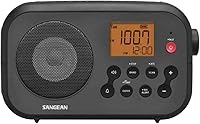
Sangean PR-D12 NOAA Alert Radio
Best for daily radio listeners - 7
 Check it
Sangean DT-400W Weather Alert Pocket Radio
Best for hands-free commutes - 8
 Check it
Sangean DT-800YL Weather Alert Pocket Radio
Best for pocket radio presets
Which NOAA weather radio fits your home or travel plans?
The WR400 is the best all-around home choice here, while the ER310 and MMR-99 fit backup kits that need flexible power options. Pocket radios suit personal listening and travel, but their small size means fewer home-oriented controls.
Midland WR400 Weather Radio Deluxe: Best for family alert stations
- S.A.M.E. programming for up to 25 counties
- Choose from 80 emergency alerts
- Siren, voice or visual alerts
- AM/FM clock radio and USB output
County programming and three alert styles make this the most flexible home pick here. Battery backup can keep it running during a power outage.
Pros
- Three alert styles
- Can monitor multiple counties
- Clock, alarm and AM/FM radio
Cons
- Backup batteries are not included
- Better suited to a fixed spot than pocket carry
The WR400 suits a household that wants control over which alerts come through and how they are signaled. It supports S.A.M.E. programming for up to 25 counties and lets you choose from 80 emergency alert types.
You can choose an 85 dB siren, a voice alert or a visual LED flasher. Its clock, alarm and AM/FM reception give it an everyday role on a bedside table or kitchen counter, so it doesn't have to sit unused between weather events.
The USB output can charge devices, and four AA batteries provide backup power during an outage. The batteries are sold separately, so keep a set with your emergency supplies and check them on a regular schedule.
Pick the WR400 if you want one central home alert station with several notification styles. Skip it if you want a pocket radio or only need a basic receiver for listening to weather broadcasts.
Midland ER310 Emergency Crank Radio: Best for outage go bags
- Multiple power sources
- Hand crank radio
- Built-in flashlight
- NOAA weather scan and alert
The ER310 combines weather alerts, a flashlight and multiple power sources in one emergency radio. It fits a backup kit where a crank option matters.
Pros
- Multiple power sources
- Flashlight and SOS alarm
- NOAA scan and alert
Cons
- Larger than pocket radios
- Crank performance details are not specified here
The ER310 is a practical choice when you want an emergency radio that can move between a home kit and an outdoor bag. It combines NOAA weather scan and alert with a built-in flashlight, multiple power sources and an SOS alarm.
It also includes an ultrasonic dog whistle and USB connectivity for a smartphone or tablet. Six AA batteries are included, giving you a ready-to-use power option to keep with the radio.
Choose the ER310 if a flashlight and flexible power matter more than county-level programming. Skip it if your main goal is selecting alerts for a particular county and setting up a stationary alert point; the WR400 or WR120B is a closer fit.
The ER310 is described as a crank radio, but the available product details don't specify how long cranking powers the radio or how much charge it provides. Treat crank power as one part of a backup plan, and keep another charged or replaceable power option available.
Midland WR120B NOAA Weather Alert Radio: Best for county alert filtering
- S.A.M.E. county programming
- Alerts for over 60 hazards and emergencies
- Choose alerts from up to 25 counties
- Color-coded alert indicators
The WR120B focuses on localized alerts, with county programming and color-coded indicators. It's a straightforward choice for a dedicated alert radio.
Pros
- Localized S.A.M.E. programming
- Alert selection for multiple counties
- Continuous backlighting option
Cons
- Fewer everyday radio features than the WR400
- Batteries are needed for backup power
The WR120B is for people who want a dedicated alert radio with localized programming. Enter the S.A.M.E. code for your area, then choose alerts from up to 25 counties.
It covers more than 60 types of hazards and emergencies, and its color-coded indicators show alert type and severity. The continuous backlighting option keeps the LCD lit, which can make status checks easier in a dim room.
The radio uses an AC adapter or six AAA batteries. Set the location and alert options before relying on it, and keep backup batteries close if the radio may lose wall power.
Choose the WR120B when county alerts are the priority and you don't need an alarm clock or AM/FM radio. Skip it if you want more functions for everyday listening; the WR400 adds those home radio features.
For more help with its controls and setup, read our Midland WR120B weather radio review.
Sangean MMR-99 Multi-Powered Weather Radio: Best for camping in wet weather
- Hand crank, solar and USB-C charging
- 7 NOAA weather channels
- IP55 dustproof and waterproof rating
- USB-A device charging
The MMR-99 offers three charging options, NOAA channels and Public Alert. Its IP55 rating and flashlight add useful features for an outdoor kit.
Pros
- Three power options
- 7 NOAA channels and Public Alert
- Flashlight and USB-A output
Cons
- Heavier than pocket radios
- Audio features may be unnecessary for alert-only use
The Sangean MMR-99 makes sense for an outdoor kit where more than one charging method matters. It supports hand crank, solar panel and USB-C charging, and receives all 7 NOAA weather channels with Public Alert.
Its IP55 rating is described as dustproof and waterproof, and it has an adjustable LED flashlight. A USB-A output can charge smaller electronics, though using the radio to charge another device can draw on its stored power.
The radio also supports AM/FM listening, Bluetooth, AUX input and headphones. Those options suit camping when you want weather reception alongside music and general radio use, but add little if you need a fixed alert station for one room.
Pick the MMR-99 if you expect to carry it outdoors and value several ways to recharge it. Skip it if you want a light pocket radio or a simple home receiver.
For a narrower comparison of crank models, see best hand crank radios.
Red Cross FRX3 Emergency Weather Radio: Best for a compact backup kit
- Emergency weather radio
- Smartphone charger feature
- Integrated LED feature
- 3 AAA batteries included
The FRX3 is an emergency weather radio with a smartphone charger feature and integrated LED feature. Its documented details are less complete than those of the other radios here.
Pros
- Emergency weather radio format
- Smartphone charger feature
- AAA batteries included
Cons
- Power options are not fully specified
- Alert controls are not detailed
The Red Cross FRX3 is a basic emergency-kit candidate with a smartphone charger feature and an integrated LED feature. It includes three AAA batteries and weighs 1.5 lb.
The available details don't explain its alert controls or power options, which makes it harder to match to a specific alert plan. That gap matters if you need to know whether it can filter alerts by county or how long it can operate without wall power.
Choose the FRX3 only after confirming how it receives alerts, which power sources it supports and how its phone charging feature works. Skip it if you want those operating details settled before you buy; the WR400, WR120B and MMR-99 have clearer use cases here.
Sangean PR-D12 NOAA Alert Radio: Best for daily radio listeners
- All 7 NOAA weather channels
- Automatic alert
- 45 AM, FM and weather presets
- AC adapter or 4 AA batteries
The PR-D12 pairs weather alerts with AM/FM listening and a large LCD display. Choose it for a radio that has an everyday listening role, too.
Pros
- All 7 NOAA channels
- 45 station presets
- AC or AA battery power
Cons
- 4 AA batteries are not included
- Less compact than pocket models
The PR-D12 pairs weather alerts with regular AM/FM listening. It receives all 7 NOAA channels and has 45 presets: 20 FM, 20 AM and 5 weather.
Its backlit LCD, two alarm timers and headphone output make it useful on a desk or bedside table. It runs from the supplied AC adapter or four AA batteries, which you need to provide for battery use.
This radio is a better fit for someone who will listen to music, news or programs as well as weather broadcasts. Choose another model if you need detailed county alert controls, because the Midland WR400 and WR120B are stronger matches for that job.
Sangean DT-400W Weather Alert Pocket Radio: Best for hands-free commutes
- NOAA alert monitoring can continue when radio is off
- 19 AM, FM and weather presets
- Button lock
- Built-in speaker and headphone output
The DT-400W carries weather reception and alert monitoring in a compact radio. Its button lock helps prevent accidental setting changes on the go.
Pros
- Small, light pocket format
- Alert monitor works with radio off
- Built-in speaker and headphone output
Cons
- Requires 2 AA batteries
- Fewer presets than the DT-800YL
The DT-400W is for people who need a compact radio for personal listening and travel. Its NOAA alert monitoring can continue while the radio is off, and a button lock helps prevent accidental setting changes in a bag or pocket.
It has 19 presets for AM, FM and weather channels, a built-in speaker and a headphone output. Two AA batteries power it, so keep spares with the radio if you expect to use it away from home.
Pick the DT-400W if a small carry size matters more than a large screen or extensive station presets. Skip it as your only household alert station if you want visible county controls and a larger display.
Sangean DT-800YL Weather Alert Pocket Radio: Best for pocket radio presets
- All 7 NOAA weather channels
- 45 AM, FM and weather presets
- LCD with backlight
- USB charging input and battery charger
The DT-800YL has a larger preset bank and backlit display in a pocket radio format. It also has a built-in battery charger with a micro-USB input.
Pros
- 45 presets across AM, FM and weather
- Backlit LCD
- Built-in battery charger
Cons
- Requires 2 AA batteries
- Small controls may take more attention
The DT-800YL keeps the pocket-radio format while adding a larger bank of presets. It receives all 7 NOAA channels and offers 45 presets across FM, AM and weather.
The backlit LCD, alarm timer, snooze function, lock switch and headphone output support daily portable use. It runs on two AA batteries and includes a built-in charger with a micro-USB input.
Choose the DT-800YL if you want a compact radio that can switch among saved stations and weather channels. Skip it if your top priority is a home alert station with county programming, where the WR400 and WR120B are more direct choices.
| Product | Best for | Alert settings | Backup power | Other use | Our score |
|---|---|---|---|---|---|
| Midland WR400 Weather Radio Deluxe | family alert stations | Up to 25 counties; 80 alert types | 4 AA batteries, not included | AM/FM clock radio; USB output | 8.8 |
| Midland ER310 Emergency Crank Radio | outage go bags | 8.7 | |||
| Midland WR120B NOAA Weather Alert Radio | county alert filtering | 8.4 | |||
| Sangean MMR-99 Multi-Powered Weather Radio | camping in wet weather | 8.3 | |||
| Red Cross FRX3 Emergency Weather Radio | a compact backup kit | 7.8 | |||
| Sangean PR-D12 NOAA Alert Radio | daily radio listeners | AM/FM radio with headphone output | 7.7 | ||
| Sangean DT-400W Weather Alert Pocket Radio | hands-free commutes | 7.5 | |||
| Sangean DT-800YL Weather Alert Pocket Radio | pocket radio presets | 7.3 |
How did we choose these NOAA weather radios?
We compared alert controls, power options and form factors against common needs: a fixed home alert station, an outage kit or a pocket radio. The score reflects how well each radio's stated features fit the needs of someone searching for the best NOAA weather radio.
A strong home radio should let you set the alert area and give you a notification you can notice. For a portable model, useful power choices, a manageable size and practical emergency functions matter more than a long list of entertainment features.
We gave higher scores to radios with specific alert controls or a clear use case. The FRX3 scored lower because details about its alert controls and power options are limited, making it harder to compare with the other picks.
What should you compare before buying a NOAA weather radio?
Compare alert coverage, power backup and where you'll keep the radio. Start with its main job: warning a household, supporting a power-outage kit, or giving one person a portable receiver.
Does S.A.M.E. programming matter for local alerts?
S.A.M.E. programming matters when you want to select counties for alerts. The WR400 and WR120B support programming for up to 25 counties; other picks here emphasize channel reception, portability or flexible power instead.
A county code helps the radio target the area you select, but it won't choose settings for you. Find the correct code for your location in the manual or through official weather information, then enter it and check the alert selection before relying on the radio.
If you travel between home and another county, think through which areas you actually need to monitor. Programming extra counties can be useful for nearby family or regular travel, but it can also bring alerts from places outside your immediate area.
Should you get a crank, rechargeable or battery radio?
Choose a crank radio if you want a power option beyond wall power or replaceable batteries. The ER310 and MMR-99 are crank models, and the MMR-99 also supports solar and USB-C charging.
A home radio with battery backup may be simpler when it will stay in one room and usually have access to an outlet. Portable radios can be easier to move, but their power plan needs more attention: use the right battery type, keep spares available, or recharge them before an expected outage.
Don't assume a crank or solar feature will replace all other power sources. The product details don't give a runtime for cranking, and solar charging depends on having suitable light.
Treat these as useful options within a broader plan, not as a reason to leave the radio uncharged.
Is a pocket weather radio enough for a home?
A pocket radio can provide personal weather reception, but it may be less convenient as a household alert station. The DT-400W and DT-800YL are small and portable, while the WR400 and WR120B offer more home-focused county programming.
For a primary home radio, consider whether you'll hear its alert from the rooms where people sleep and spend time. Also consider how easy it is to read the display and adjust settings, especially if several people may need to use it.
A pocket radio can still be a useful second receiver in a travel bag. Keep it where you can reach it, and make sure the person carrying it knows how to turn on alert monitoring.
How many NOAA weather channels do you need?
All 7 NOAA weather channels provide the full channel set for NOAA Weather Radio broadcasts. The PR-D12, MMR-99, DT-400W and DT-800YL specify reception across all 7 channels.
That doesn't mean every channel will be equally clear where you live. Reception depends on your location and the signal reaching the radio, so identify the local frequency and place the radio where it receives a usable signal.
Use our NOAA weather radio frequencies guide to learn how the channels are organized. If the radio isn't receiving alerts, our guide to why a NOAA weather radio may not work covers common reception and setup issues.
What power backup should you keep ready?
Keep the backup power that matches your radio and know how to use it before an outage. The WR400 uses four AA backup batteries, the WR120B uses six AAA batteries, and the PR-D12 takes four AA batteries when it isn't connected to its adapter.
For a radio with rechargeable power, make a habit of charging it before trips and checking it during routine emergency-kit reviews. If your model has more than one power method, learn how each one works while conditions are calm.
A radio that is still in its box or has depleted batteries won't help when an alert arrives. Store the manual and any special cables or accessories with it so you can find them when needed.
How should you set up and care for a weather radio?
Set up your radio as soon as you bring it home, then check its settings and power at regular intervals. A short setup routine helps catch a wrong county code, poor reception or dead batteries before severe weather.
First, place the radio near a power outlet if it is meant to stay in one room, and connect its adapter where applicable. Install the correct backup batteries, or charge a rechargeable model, then keep its manual and any needed cable nearby.
Next, tune to the local weather channel and confirm reception from the intended spot. If the radio supports S.A.M.E., enter the correct county code and choose which alerts to receive; test the controls according to the manual rather than assuming default settings match your needs.
Set the alert volume and notification style so they suit the room. A radio placed in a closed cabinet or far from sleeping areas may be hard to hear or may receive a weaker signal, so choose an open, reachable location and check reception there.
Once set up, review the display, power and alert settings every few months and after moving the radio. Replace disposable batteries when needed, recharge built-in batteries before trips, and keep water and dust within the limits of the model's stated protection.
What mistakes can make a weather radio less useful?
The most common avoidable mistake is buying a radio before deciding where it will be used. A pocket model may be easy to carry but less convenient for a household, while a feature-rich clock radio may be awkward in a travel kit.
Another mistake is treating all power features as equal. A radio with backup batteries still needs the correct fresh batteries, and a crank or solar option should be understood and maintained before an emergency rather than discovered during one.
People can also overlook alert setup. A county-capable model still needs the right code and alert choices.
A portable receiver still needs a usable local channel and enough power, so confirm those settings rather than assuming that switching the radio on completes setup.
Finally, don't let a phone charging port become the main reason to choose a radio. Charging a phone can drain a radio's stored energy, so decide whether weather alerts, light, listening or device charging has priority during an outage.
Which NOAA weather radio should you choose?
Choose the Midland WR400 for a home alert station with county programming and several ways to receive warnings. Pick the WR120B if localized alerts matter more than clock and AM/FM functions.
For an outage kit, choose the ER310 for a flashlight and multiple power sources, or the MMR-99 if you also want solar and USB-C charging for outdoor use. Choose the DT-400W or DT-800YL when portability is the priority, and use our guide to weather watches and warnings to understand the terms used in alerts.
Our top 3 picks at a glance
-
1
-
2
-
3
Best for county alert filtering
Midland WR120B NOAA Weather Alert Radio
8.4/10 our score
See it on Amazon
Frequently asked questions
What is the best NOAA weather radio for home use?
The Midland WR400 is the strongest home pick here because it supports S.A.M.E. programming for up to 25 counties and offers siren, voice or visual alerts.
The WR120B is a simpler dedicated alert radio if you don't need the WR400's clock and AM/FM features.
Do NOAA weather radios need to stay plugged in?
Some models use an AC adapter and battery backup, while portable radios may use replaceable batteries or rechargeable power. The WR400 can use AC power or 4 AA backup batteries, and the Sangean MMR-99 supports hand crank, solar and USB-C charging.
Keep a backup power plan with your radio.
What does S.A.M.E. mean on a weather radio?
S.A.M.E. stands for Specific Area Message Encoding. It lets you program a radio for alerts tied to selected counties, which can reduce alerts for places outside the area you care about.
See our guide to NOAA weather radio frequencies for channel basics.
Can a NOAA weather radio alert you while it's off?
Some radios can monitor for alerts while you aren't actively listening to a station. The Sangean DT-400W supports continuous NOAA Public Alert monitoring even when the radio is off.
Check how a model handles alert standby and power before relying on it overnight.