Battery Powered or Hand Crank Radio: Which Should You Buy? (October 2026)
Choose a battery powered radio for easy routine listening, or a hand crank radio when you want a way to make power during an outage. A model with both gives you stored power and a manual backup.
On this page (9 sections)
- Battery powered or hand crank radio: how do the power options differ?
- Who should choose a battery powered radio?
- Who should choose a hand crank radio?
- When does a radio with several power sources make sense?
- Which radio fits your emergency plan?
- How should you set up a radio before an outage?
- How do you care for and use a battery or crank radio?
- What mistakes should you avoid when choosing a radio?
- Battery powered or hand crank radio: which should you buy?
A battery powered or hand crank radio suits different plans: choose batteries for simple operation, a crank for manual backup, or a radio with both if you want stored and generated power. The Midland ER310 combines a crank with included AA batteries, while the Sangean PR-D12 runs on AA batteries or its supplied AC adapter.
A battery radio is easy to use when you have fresh batteries ready. A crank can help when stored power runs down, but it takes time and effort to turn, so it may not be the way you want to power a radio for long listening sessions.
The right choice depends on where you'll use the radio, whether you can keep batteries charged or replaced, and which alerts or stations you need. This guide compares three approaches and explains how to set up a radio before an outage.
Battery powered or hand crank radio: how do the power options differ?
A battery powered radio draws on stored power, while a hand crank radio lets you generate power by turning a handle. Some emergency models combine a crank with replaceable batteries, a rechargeable pack, solar power or an AC adapter.
Replaceable batteries are straightforward: install the type the radio requires, keep spares nearby and replace them when needed. A radio that accepts an AC adapter can also be convenient at home, though an outlet won't help during a power cut.
A rechargeable pack stores power inside the radio. Depending on the model, you may be able to recharge it with a crank, solar panel or another input.
Read the instructions so you know which options actually recharge the pack and how to use them.
Cranking needs your attention and physical effort. The amount of listening time it provides varies by radio and use.
Don't assume a short turn will power hours of listening. Follow the manufacturer's instructions for cranking and charging.
Solar power can add another option, but its usefulness depends on having suitable light and time. A model with several power sources gives you choices, yet it can also mean more charging methods and settings to understand.
Who should choose a battery powered radio?
Choose a battery powered radio if you want simple operation and can keep the required batteries on hand. This setup suits routine listening, a home weather radio near an outlet, or an emergency kit where you already store spare batteries.
Battery power avoids the need to turn a handle whenever the radio needs more energy. Before relying on it, check the battery type, quantity and whether the batteries are included.
Store spares where you can find them, and follow the radio's guidance for installing and replacing them.
The Sangean PR-D12 suits home listeners who want to use either 4 AA batteries or the supplied AC adapter. It receives all 7 NOAA weather channels, has 45 station presets and includes an LCD display.
Choose a battery-only model only if you have a realistic plan for fresh or charged batteries. Skip that approach if you expect to be away from outlets for a long outage and don't want to store or replace batteries.
Who should choose a hand crank radio?
Choose a hand crank radio if you want a manual power option for emergencies and are willing to operate the handle when needed. It can make sense in a home emergency kit, a cabin or another place where spare batteries may not be easy to get.
A crank does not remove the need to plan. You still need to know how the radio stores power and how much cranking its instructions call for.
You also need to know whether it receives the stations or alerts you care about. If you expect long periods of listening, consider whether a crank alone would be practical.
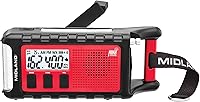
The Midland ER310 combines a hand crank with 6 included AA batteries. It also has a built-in flashlight and NOAA weather scan and alert, so it suits buyers who want a manual option alongside replaceable batteries.
Skip a crank-only approach if turning a handle would be difficult or frustrating, or if you want to listen for long periods without managing power. A crank is a backup method, not a guarantee of continuous power without effort.
For more options, compare our guide to the best hand crank radios. It can help you narrow down the combination of power sources and emergency features that fits your kit.
When does a radio with several power sources make sense?
Choose a radio with several power sources if you want more than one way to keep it operating and are comfortable learning each option. Multiple inputs can add flexibility, but they do not make every charging method equally convenient in every situation.
The Kaito KA500 combines a hand crank and solar panel with a built-in rechargeable battery pack and a compartment for 3 AA batteries. It covers AM, FM, 2-band shortwave and 7 pre-programmed NOAA weather channels.
It also has a USB output for mobile devices, a flashlight, a reading lamp and a red SOS beacon. The wall power adapter is sold separately, and the 3 AA batteries are not included.
This mix may fit an emergency kit where you want solar and manual charging options alongside a rechargeable pack. Skip it if you prefer a simple battery radio and don't expect to use the extra power and lighting features.
The USB output can be useful in an emergency, but don't assume it will charge a phone quickly or replace a dedicated charger. Our guide to whether a hand crank radio can charge a phone explains what to consider.
Which radio fits your emergency plan?
Match the radio to where you'll use it, the power you can maintain and the information you need to receive. A power source matters only if it works with your routine and the radio has the right features.
For a combination of manual and replaceable battery power, consider the Midland ER310. It is the clearest fit if you want a crank, included AA batteries and weather scan and alert in one radio.
For a broader selection of power and lighting options, consider the Kaito KA500. Its crank, solar panel, rechargeable pack and AA compartment give you several ways to supply power, along with AM, FM, shortwave and NOAA weather reception.
For home listening with outlet power nearby, consider the Sangean PR-D12. It has no crank or solar panel, but it accepts the supplied AC adapter or 4 AA batteries and receives all 7 NOAA weather channels.
If weather alerts are your main reason for buying, compare alert features and channel reception directly. See our NOAA weather radio guide for help choosing that type of radio, and our NOAA frequency guide for the seven weather channels.
How should you set up a radio before an outage?
Set up the radio while you have time to read its instructions, check its power and find the right stations. A radio packed away unused may be harder to rely on when you need weather or news updates.
Start by checking what powers the model and whether it needs batteries, an adapter or a charged internal pack. Install batteries as directed, and store any spares where they'll stay easy to find.
If the radio has a rechargeable pack, learn how to recharge it before an emergency.
Turn the radio on and find the local stations or weather channels you plan to use. If your model supports presets or alerts, learn how those controls work and confirm the sound is loud enough to hear from its usual storage spot.
Choose an accessible storage location that keeps the radio with your emergency supplies. Leave enough room to operate a crank if the model has one.
If the radio will sit near an outlet, make sure you can reach the adapter and controls.
How do you care for and use a battery or crank radio?
Keep the radio ready by following its instructions, checking its power source and storing it where you can reach it. Regular attention helps you catch a depleted battery or an unfamiliar control before an emergency.
For a battery radio, check the batteries at intervals and replace them according to the manufacturer's guidance. Don't mix battery types or improvise a power source; use only the types and methods the radio supports.
For a crank radio, learn how the handle folds or turns and how the radio indicates that it is receiving power, if it has such an indicator. Crank as directed, and let the radio rest or recharge through another supported source when practical.
If a radio has solar charging, place it in suitable light as its instructions describe. Solar is a useful option to understand in advance, but don't count on it as your only power plan if you can't provide the needed light.
After use, put the radio and any separate adapter or spare batteries back in their designated place. Keep the controls and antenna accessible, and avoid storing the radio where it could be buried under supplies.
What mistakes should you avoid when choosing a radio?
The main mistake is choosing by the words “battery” or “crank” alone instead of checking the actual power setup and alert features. Those labels do not tell you what batteries a radio takes, whether they are included or how it receives weather alerts.
Don't assume every crank radio has a battery compartment or solar panel. Check for the specific options you want, including a built-in rechargeable pack, replaceable batteries, wall power and USB output.
Don't assume every battery powered radio is suitable for emergencies. If alerts matter, confirm that the model receives the weather channels you need and supports alert functions.
A radio can be useful for music and news without having the alert setup you want.
Don't buy extra features you won't use. Shortwave, a reading lamp, a flashlight or a phone charging port may be helpful in a kit, but they shouldn't distract from your main need: a dependable power plan and the right stations.
Finally, don't treat a crank as unlimited energy. It requires effort, and the useful charge you get depends on the radio and how you use it.
Keep a second supported power option if you want less reliance on manual cranking.
Battery powered or hand crank radio: which should you buy?
Buy a battery powered radio if you want easy operation and can keep spare batteries ready; choose a hand crank radio if you want a manual backup and can turn it when needed. Pick a model with both, or with solar and a rechargeable pack, if you want more ways to supply power.
The Midland ER310 is the fit for a crank and included AA batteries. Choose the Kaito KA500 for crank, solar and rechargeable power options, or the Sangean PR-D12 for home listening from an outlet or AA batteries.
For a closer comparison of two crank options, read Kaito KA500 vs Midland ER310. If you mainly need weather alerts, start with our NOAA weather radio guide.
Frequently asked questions
Do hand crank radios need batteries?
Some hand crank radios can generate power by cranking, but designs differ. Check whether a model also has a built-in rechargeable pack, takes replaceable batteries or accepts wall power.
Those options can make it easier to keep listening when you don't want to crank.
Is a battery and crank emergency radio a good choice?
A battery and crank emergency radio gives you two ways to power it. Batteries are convenient for regular use, while a hand crank offers another option when you can't replace or recharge them.
Check the radio's other power sources and alert features before choosing.
Is a hand crank radio better than a battery radio?
A hand crank radio can add flexibility during an outage, especially if it also has stored or replaceable power. A battery radio is simpler for routine listening.
Choose based on how often you'll use it and how you plan to keep it powered.
Can a hand crank radio charge a phone?
Some models have a USB output for mobile devices, but that feature doesn't tell you how quickly a phone will charge. Check the radio's charging details and save this function for emergencies.
See our guide to whether a hand crank radio can charge a phone.