What Is the Longest Range FRS Radio?
The longest range FRS radio is one that uses the full 2-watt legal limit, and Rocky Talkie says its Mountain Radio reaches over 35 miles in the best case. Typical real-world FRS range is closer to 1 to 5 miles in backcountry terrain, because hills, trees and buildings block the signal.
On this page (8 sections)
- What is the longest range FRS radio on paper?
- Why do FRS radios claim such different ranges?
- What range should you expect in the real world?
- Does power or terrain limit FRS range more?
- Which FRS radios get the most out of 2 watts?
- Can you legally boost FRS range?
- How do you get the most range from any FRS radio?
- Which FRS radio should you buy for the longest real-world reach?
The longest range FRS radio is one that uses the full 2-watt legal limit, and Rocky Talkie says its Mountain Radio reaches over 35 miles in the best case. Typical real-world FRS range is closer to 1 to 5 miles in backcountry terrain, because hills, trees and buildings block the signal.
If you are shopping for maximum reach, understand that no FRS radio gets around physics. The question "what is the longest range frs radio" has a simple answer at the spec level and a more honest answer once you leave the parking lot.
What is the longest range FRS radio on paper?
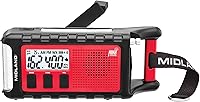
The Mountain Radio is the longest range FRS radio in this guide, with a claimed maximum of over 35 miles. It runs at 2 watts, the maximum power the FCC allows on FRS without a license.
That 35-mile figure assumes open, unobstructed ground with both radios held high. Rocky Talkie itself says 1 to 5 miles is more typical in backcountry terrain.
Treat the big number as a ceiling, not a promise.
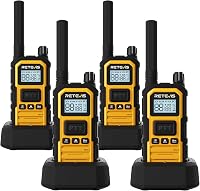
The Retevis RB48 and the Gaswei G2pro+ also run at 2 watts. Retevis says its radios reach up to 300,000 sq ft or 25 floors, and Gaswei lists up to 6 miles over open water.
All three sit at the same legal power limit, so their real-world reach lands in a similar band.
Why do FRS radios claim such different ranges?
FRS radios share the same 2-watt cap, so a 35-mile claim and a 6-mile claim describe different test conditions, not different power. Marketing numbers are measured on open water or flat desert with nothing in the way.
FRS uses UHF frequencies in the 462 to 467 MHz band. UHF travels well through openings but does not bend around hills or punch through dense walls.
A ridge between two radios can cut a 35-mile path down to a fraction of a mile.
Buildings, wet trees and even a body blocking the antenna all reduce reach. So does a low battery or a radio tucked in a pack.
The published maximum is the best case, and the usable range is whatever terrain allows.
What range should you expect in the real world?
Plan on 1 to 5 miles in backcountry terrain and less in cities, even with the longest range FRS radio. That gap between the claim and the trail is the single most useful thing to know before you buy.
Rocky Talkie states 1 to 5 miles as typical for backcountry use. Gaswei breaks its G2pro+ range down further: up to 6 miles over open water, 2 to 4 miles in open areas, 1 to 3 miles in neighborhoods and 0.5 to 1.5 miles in urban areas.
Those numbers line up with how UHF behaves. Open water and flat fields give you the most distance.
Suburbs and dense city blocks cut it sharply. Hills and thick forest sit somewhere in between and depend on your exact spot.
Does power or terrain limit FRS range more?
Terrain limits FRS range more than power does, once you are at 2 watts. A 2-watt radio on a ridge will out-reach a 0.5-watt radio in a valley almost every time.
Power matters at the margins. A 2-watt model beats a 0.5-watt model in the same spot, which is why the radios here all use the full limit.
But no amount of legal FRS power pushes a signal through a mountain.
Height is the lever you actually control. Standing on high ground, holding the radio at shoulder level and keeping the antenna clear of your body all help more than swapping radios.
For longer paths, you need a licensed service with more power, which is why how far a GMRS radio can reach is a different conversation.
Which FRS radios get the most out of 2 watts?
The Mountain Radio, the Retevis RB48 and the Gaswei G2pro+ all run at the 2-watt FRS limit, and each one earns its place for a different reason. The Mountain Radio is the range pick, the RB48 is the rugged pick and the G2pro+ is the waterproof pick.
Which radio should you pick for backcountry range?
Pick the Mountain Radio if raw reach and battery life top your list. It runs at the 2-watt limit and Rocky Talkie says the rechargeable lithium-ion battery lasts over 4 days, even in cold weather.
The body has a shatterproof LED screen and a thermoplastic cover. It attaches to a pack with a climbing-rated carabiner and a metal-reinforced back-up leash instead of a plastic clip.
It's rated IP56 for splashes and snow, and it comes ready to use with no setup.
That mix suits backpackers and ski tourers who need the radio to survive a multi-day trip. The 35-mile claim is the headline, but the battery and attachment design are what make it useful on a real trail.
Which radio should you pick for tough job sites?
Pick the Retevis RB48 if your radio lives on a construction site or in bad weather. It's built to MIL-STD-810H and rated IP67 for dust and water, with 2-meter drop resistance and a 2000mAh battery that Retevis rates at up to 20 hours.
The large dual PTT buttons work with gloves on, and a vibration alert warns you of incoming calls in noisy places. It also has 11 NOAA weather channels and a 2.5 mm audio jack for an earpiece.
Range is rated at up to 300,000 sq ft or 25 floors, which fits warehouses and multi-story buildings. The bright yellow shell is easy to spot on a crowded site.
Which radio should you pick for water and weather?
Pick the Gaswei G2pro+ if your trips involve boats, rain or riverbanks. It's IP67 rated and floats, so a drop over the side doesn't end the trip.
It runs at 2 watts with high and low power settings. Gaswei lists up to 6 miles over open water and 2 to 4 miles in open areas.
The 22 FRS channels and 121 privacy codes help keep your group separate from nearby users.
Extra features include NOAA weather alerts, FM radio, VOX with nine sensitivity levels, whisper mode and dual watch. The battery is rated at up to 120 hours.
If you also want a radio for emergencies at home, a hand crank radio covers a different job.
Can you legally boost FRS range?
No. FRS rules cap power at 2 watts and do not allow detachable antennas, so you cannot legally add range with a bigger antenna or an amplifier.
Any radio sold as FRS is already at the ceiling.
The FCC sets these limits to keep the shared channels usable. A radio modified to exceed them is no longer a legal FRS radio, and using one can bring fines.
If you need more reach than FRS gives, the legal path is a GMRS license. It allows more power and repeater use, and GMRS radios still talk to FRS radios on the shared channels.
Our guide to the best GMRS handheld radios covers that option.
How do you get the most range from any FRS radio?
Get the radio high, keep the antenna clear and stay within line of sight. These three habits do more for range than any spec sheet.
- Hold the radio at shoulder height or higher, away from your body.
- Stand on a ridge or open ground when you need to reach someone far away.
- Keep the battery charged, since weak power shortens reach.
- Avoid transmitting from inside a vehicle or a dense building when you can step out.
For hunting, where you may be spread out across rough ground, a long range two way radio for hunting can help you plan around terrain. Even then, the same rules apply: height and clear sight lines beat every marketing number.
Which FRS radio should you buy for the longest real-world reach?
Buy the Mountain Radio if maximum claimed range and cold-weather battery life are your priorities. It uses the full 2-watt limit and Rocky Talkie's 35-mile figure is the highest in this guide.
Choose the Retevis RB48 for a rugged, waterproof radio that survives drops and works with gloves. Choose the Gaswei G2pro+ for floating waterproofing and open-water range.
So what is the longest range frs radio in practice? It's the 2-watt model you keep charged, hold high and point across open ground.
Expect 1 to 5 miles in the backcountry, and treat every bigger number as the best case it is.
Frequently asked questions
Does more power mean more FRS range?
Only up to the 2-watt legal cap. Every FRS radio tops out there, so a 2-watt model beats a 0.5-watt model but two 2-watt radios are close.
Terrain and antenna height usually matter more than small power differences.
Can I extend FRS range with a better antenna?
No. FRS rules do not allow detachable antennas, so the antenna you get is the one you keep.
Range gains come from position instead, like standing on a ridge or holding the radio away from your body.
Is FRS the same as GMRS?
No. FRS needs no license and caps at 2 watts, while GMRS needs an FCC license and allows more power.
GMRS radios can talk to FRS radios on the shared channels, which is why many families mix the two.
What actually limits FRS range in the woods?
Hills, dense trees, ravines and wet foliage absorb and block UHF signals. A 2-watt FRS radio that claims 35 miles may only reach 1 to 5 miles in backcountry terrain, so plan around line of sight.
Can a 2-watt FRS radio reach a mile in a city?
Often less. Buildings, concrete and steel cut UHF range hard, so expect about 0.5 to 1.5 miles in dense urban areas even with the best FRS radio.