Midland MXT575 Review: GMRS Mobile Radio (November 2026)
Buy the Midland MXT575 if you want the most powerful GMRS mobile radio the law allows and a dash that stays clear. Its 50 watts and integrated control mic suit trucks, off-road rigs and repeater users, but the MXT275 is easier for tight cabs.
On this page (9 sections)
The Midland MXT575 is the GMRS mobile radio to buy if range matters most and your dash is tight. It puts 50 watts, the legal maximum, behind an integrated control microphone, so the radio body tucks away and the buttons stay in your hand.
That combination suits highway convoys, trail groups and anyone working through repeaters. If you mostly talk on short camp trips or have a cab with no room to hide a base unit, the smaller Midland MXT275 is the easier fit.
This midland mxt575 review breaks down what the specs mean in daily use, how the install works and where the radio gives up ground.
The Midland MXT575 at a glance
The MXT575 is a 50W GMRS mobile radio with a fully integrated control microphone. Midland rates it at a 50-mile maximum talking range and builds in 8 repeater channels, 15 high-power channels, NOAA weather scan and alert, and 142 privacy codes.
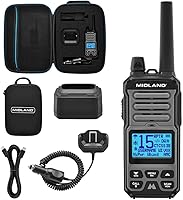
Midland MXT575 50W MicroMobile GMRS Radio: Best for long-range GMRS in trucks

- 50W GMRS output
- Fully integrated control microphone
- 8 repeater channels
- NOAA weather scan and alert
- USB-C charging
- Backlit display
The strongest GMRS mobile radio Midland makes, with all controls packed into the microphone so the base unit hides away. A strong pick for trucks, trail rigs and repeater use.
Pros
- 50W is the legal GMRS maximum
- Integrated control mic keeps the dash clear
- 8 repeater channels for wide-area coverage
- NOAA weather scan and alert
- USB-C charging and backlit display
Cons
- Needs a hardwired 12V install, not a plug-and-go handheld
- The control mic carries every button you press
- More radio than a short trail or campsite run needs
The base unit is a compact 1.5 by 7 by 5.5 inches and weighs 3.8 lb, so it stows under a seat, behind a panel or in a console. It tunes the UHF band from 462.5500 to 467.7125 MHz and runs at 50 ohms impedance, the standard for GMRS antennas.
Midland backs it with a 1-year warranty.
The "MicroMobile" name is the whole idea. The base unit is a hideaway box, and the microphone is the only part you actually touch.
The radio is sold as a single unit, and the model number MXT575-MFN appears on the box.
Our score weighs specs, features and buyer feedback against what you're shopping for. For a mobile GMRS radio, that means power, repeater support, controls and how well the unit fits a vehicle.
Who the MXT575 suits
Buy the MXT575 if you drive with a group and want the longest reach GMRS allows. A 50W radio with an 8-repeater setup is the right tool for highway convoys, ranch vehicles, work trucks and trail rigs that spread out over miles.
It also suits anyone with a cramped dash. The integrated control mic means you mount one small mic and hide the rest, which is a real advantage in a Jeep, side-by-side or older pickup with little flat real estate.
Consider the vehicle type too. A full-size truck or SUV has room for the base unit under a seat or in the console, but the MXT575 asks less of the dashboard than a radio with a faceplate.
The smaller footprint is what makes the integrated mic design worth it.
Skip it if you only need radio contact around a campsite or between two vehicles in a small group. The extra power costs more and demands a proper install, and a handheld or a lower-power mobile does that job well.
Skip it too if you won't get a GMRS license. GMRS in the US needs an FCC license, which covers your household, so factor that in before you transmit.
The specs that matter in daily use
The figure that changes your day is 50 watts. Midland calls it the most powerful GMRS radio allowed by law, and that power is what lets the MXT575 hold a conversation at highway distance that weaker radios lose.
On open road and flat country, the extra watts are the difference between a clear check-in and a broken one.
The 8 repeater channels matter just as much. With a local repeater and its tone settings, you can talk well past direct line of sight, which is how many GMRS groups cover a whole valley or metro area.
Repeater access is the real range multiplier on this radio.
The 15 high-power channels cover the GMRS set, and the 142 privacy codes quiet the channel rather than encrypt it. They cut out other traffic on busy channels, but anyone scanning without the matching tone can still hear you.
The radio also supports wide and narrow band, so it matches the channel spacing your group uses. The backlit display stays readable at night, and the magnet mount with cable in the box gives you a starting point for the antenna run.
USB-C charging is a small convenience that adds up. NOAA weather scan and alert is the practical safety feature on the road and on the trail, since the radio can scan weather channels and sound an alert for severe conditions in the area.
How setup works for a mobile radio
Plan the MXT575 as a hardwired 12V install, not a plug-and-go device. That means a power run to the vehicle's electrical system, a mount for the base unit and a clean route for the mic cable.
Start by choosing where the base unit lives. Under a seat, behind a kick panel or inside a console all work, as long as the unit gets the ventilation the manual requires and the antenna cable reaches.
The 1.5-inch depth helps here, since the box slides into gaps a faceplate radio can't.
The control mic is where you interact with the radio, so mount it within easy reach of the driver or a passenger. Route its cable away from pedals and moving parts, and leave enough slack to lift the mic to your mouth.
The antenna is the part that decides your real range. Use a proper GMRS antenna with a good ground plane, and keep the cable away from sharp edges and heat sources.
The magnet mount that comes with the radio is a convenient way to get on the air, but a permanent mount usually holds up better over years of use.
Set your privacy codes and repeater tones before the first group run. Testing at home on a quiet channel with a second radio is far easier than sorting settings out on the trail.
A quick test also tells you whether your antenna mount is hearing as well as it should.
Care and everyday use
Treat the MXT575 like vehicle electronics that need steady power and a clean antenna path. Check the power connection and the antenna mount now and then, since vibration loosens both faster than most people expect.
Keep the control mic and display clean with a soft cloth. Dust and grit work into buttons and screens on dusty trails, so a quick wipe after a rough day pays off.
Store the mic out of direct sun when the vehicle sits for long spells. Heat is hard on cables and plastic, and a cracked mic cable is the most annoying failure on a mobile radio.
Because every control lives on that mic, a damaged cable takes the whole radio with it.
Keep the call sign where anyone using the radio can see it, and brief passengers on channel changes. GMRS etiquette is simple, but a group run goes smoother when everyone knows the plan.
If the radio ever sounds weak, check the antenna before the unit. A corroded mount or a nicked cable accounts for a lot of "bad radio" days.
Trade-offs to know before you buy
The MXT575's biggest trade-off is that everything runs through the control mic. Channel changes, volume and settings all happen on the mic body.
If the mic cable fails or the mic takes a hard hit, the radio goes quiet, so treat that cable with care.
The install is the second one. A 50W mobile radio needs a real power run and a good antenna, which is more work and more cost than dropping a handheld in a cup holder.
The radio's 3.8 lb base unit also needs a solid mount so it doesn't shift over rough ground.
Power also doesn't fix terrain. In deep canyons or dense city blocks, 50 watts still struggles, and a repeater or a better antenna spot does more for you than raw wattage.
The 50-mile figure is a line-of-sight rating, not a promise for every trail.
Finally, this is more radio than many people need. A short trail run or a campsite chat doesn't need the legal maximum, and a smaller unit saves money and dash space.
The alternatives here
Two other Midland radios cover the cases where the MXT575 is more than you need or where a handheld fits better. Each one changes the install, the reach or both.
Midland MXT275 GMRS Mobile Radio
The midland mxt275 is the closer sibling and the easier install. It uses the same integrated control microphone idea at lower power, so it suits a compact car or a first mobile radio where the MXT575 is overkill.
You keep the clear dash and the hideaway base unit, and you give up the top-end wattage.
If you're weighing the two, our guide to the Midland MXT275 vs MXT115 sorts out the lower-power options, while the GMRS mobile radio guide puts every serious mobile unit in one place. The MXT275 is the sensible first step for a driver who wants a mobile radio without the full 50W install.
Midland GXT67 PRO GMRS Radio
The midland gxt67 pro is the handheld answer. It makes sense if you want a radio you can carry on foot and don't want to wire a vehicle, though a handheld gives up the reach of a 50W mobile.
For hiking, spotting or a passenger walking ahead of the truck, the handheld does the job the MXT575 can't.
Verdict: is the MXT575 worth it?
Buy the Midland MXT575 if you want maximum GMRS power and a clear dash, and you'll do a proper install. The 50W output, 8 repeater channels and integrated control mic make it the strongest pick for trucks, trail groups and highway convoys.
The hideaway base unit and the mic you can mount almost anywhere seal the case for a crowded cab.
Choose the MXT275 if you want a simpler, cheaper mobile for a tight cab, and pick the GXT67 PRO if you'd rather carry a handheld. If your goal is a dedicated mobile in a vehicle and you'll wire it properly, the MXT575 is the one to get.
What to know before you install a 50W mobile
Get the FCC GMRS license first, then plan power, antenna and mic routing before you drill or cut. The radio is only as good as the install around it.
A licensed driver with a clean install gets more out of this radio than an unlicensed one with a loose antenna.
A 50W mobile draws meaningful current, so run the power lead to a proper circuit rather than a loose accessory socket. Use the manual's wiring guidance and a fuse that matches the radio.
The base unit also needs airflow, so don't bury it under blankets or gear.
Give the antenna a real ground plane and clear sky. Roof or hood mounting usually beats a bumper or a low corner, and a short cable run loses less signal.
Check that the mount suits your vehicle before you commit to a spot.
Leave room for the mic cable to move. A tight run that yanks the mic when the seat slides will fail faster than a slightly longer route.
Set the channel and privacy codes before the first run so you aren't fiddling with buttons while driving.
Test before you tidy the wiring. Once you know the radio hears and transmits on a quiet channel, then tuck the cables and trim the zip ties.
Our overall GMRS mobile radio comparison is the next stop if you're still deciding between models.
Pick the MXT575 for power and a hidden base unit, the MXT275 for a tight cab and a smaller budget, and the GXT67 PRO for a handheld you can carry anywhere.
Frequently asked questions
How many watts does the Midland MXT575 put out?
It runs 50 watts on GMRS, which is the most power the FCC allows for that service. More power helps on open highway and when reaching repeaters, but it doesn't replace a good antenna and mount.
Does the MXT575 need a license?
Yes. GMRS in the US requires an FCC license, which covers your household.
Buy the license before you transmit, and keep the call sign handy for anyone else using the radio.
What is the range of the MXT575?
Midland puts the maximum talking range at 50 miles, a figure for clear line of sight with a good antenna. Hills, buildings and trees cut that sharply, so plan on realistic trail and convoy coverage rather than the headline number.
Can the MXT575 reach GMRS repeaters?
Yes. It has 8 repeater channels, so it can work through a repeater to talk well past direct line of sight.
You'll need the repeater's tone settings and permission to use it.